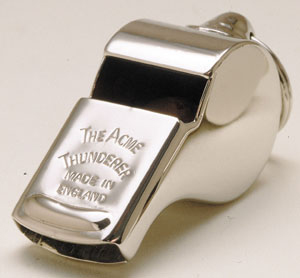
 Rugby has often been described as a chaotic mess, a game of raw emotional passions with little other substance to it. I, on the other hand, would argue that it is rather organized chaos. Yes, it can certainly seem like a mess from time to time, but behind every action within a game there is a purpose, whether said actions be in contravention of the laws of the game or not. And behind the structure that organizes that anarchy on the pitch is one individual: the rugby referee.
Of course, like any other person involved in amateur sport, a rugby referee can simply be in it for fun, to maintain a small connection to the game they still love but can no longer give their body to. But at the same time, there are also those referees who wish to become masters of the art, and progress through the ranks to referee the best players on the grandest stage for the simple reason that he or she wants to provide those involved in that match with the platform through which they will perform at their very best.
I really want to emphasize that point. As I describe how it is that a rugby referee – and the actions required of the individual pre-match, during the match, and post-match – is directly related to the art of being a high school teacher, the key characteristics both individuals have is a passion for setting the stage of expectations and inviting the participants to rise to the occasion. And I think this invitation to meet those expectations is the ultimate purpose of the referee, and the secondary school teacher. Part of my own educational philosophy entails increasing the level of ownership and responsibility of the student body in their own education. By the time those students leave my classroom, I do not want them to simply be able to make good decisions, but also to own up to those decisions when they may not have been the wisest of choices.
Prior to the beginning of a match, any good referee will prepare by doing a number of things. First, he or she will assess the teams and players involved and try to dissect what it is they may try and accomplish based on their skill set. The referee will also be sure to be prepared both physically and mentally prior to the match, knowing whether or not they will be able to keep up with play, and ensuring that they are knowledgeable in the laws of the game and their interpretations for purposes of consistency. This process is directly related to that of a high school teacher. By getting to know his or her students, the educator is able to plan their own lessons and materials (all of which they are working experts in) according to the abilities and learning styles of those particular students.
As the match progresses from beginning to end the top referees will demonstrate flexibility and adaptability depending on the circumstances, all while portraying a sense of empathy towards the players. An educator in a high school setting must be much the same. Every day will bring a new set of challenges for both the students and the teacher. Under these conditions, the teacher has to have a sense for how to best get students to respond to the task at hand. If students begin to form bad habits or alter their behaviour due to mitigating circumstances, much like rugby players do, it is up to the teacher to identify the issues and help the students rectify the problem. By demonstrating empathy towards the students,and garnering their trust, their response to our help will be that much more meaningful.
Finally, at the end of the 80 minutes, when all is said and done, the referee will already be preparing for the next match by trying to identify his or her own weaknesses in their post-match reflection and review. Once again, there is a strong need for similar action in the field of secondary school education. Too often we as teachers get bogged down by routine and habit. It is incumbent upon us to take a look at our own work every now and then in order to perfect our craft. Otherwise, we will never be able to fully help students attain that bar of expectation.
 Footprints In The Mud